
The Motif of Trains and Omens
The Girl on the TrainThis thread traces the railway and magpie rhyme as recurring signs of passage, danger, and the limits of foreknowledge.
increasing Bearing strength in each event
 decreasing
Bearing strength in each eventdecreasingThe Train as Refuge
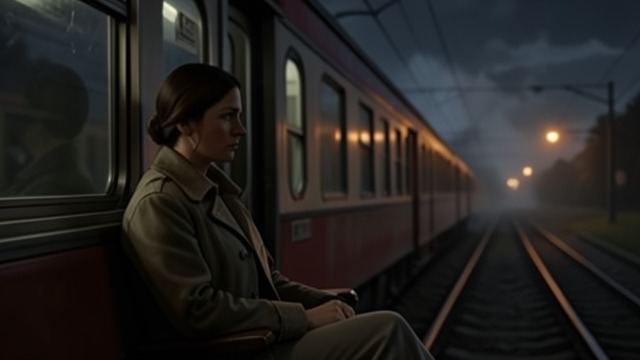
A Repeated Journey
Motion without arrival
Rachel finds comfort in the 8.04 train’s rhythm, using its predictable route to avoid confronting the emptiness of her days. The carriage moves while her life feels stuck.
A threshold
The train gives her a view into other homes but keeps her physically separate. It becomes both shelter and boundary between observation and participation.
The Trackside Clothes
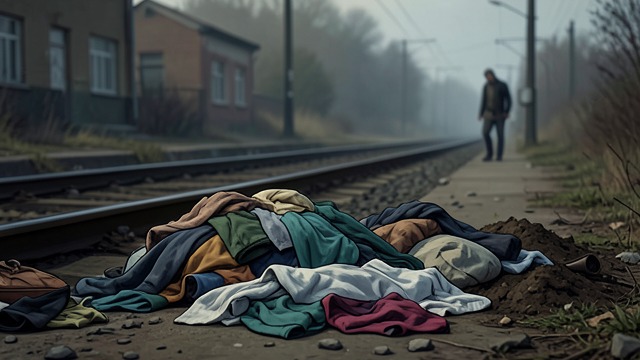
A Warning Without Meaning
A recurring image
The pile of clothing beside the railway appears ordinary, yet Rachel repeatedly imagines a person and a possible death behind it. She searches for blood but finds no answer.
Omen after the fact
The image acquires the atmosphere of a warning, although it does not identify a victim or predict the crime. Its force comes from Rachel’s anxious imagination.
The Magpie Rhyme

Counting Birds
Megan’s association
Megan recites the magpie rhyme in the woods and connects it with secrets. The birds become part of her private language for what cannot be openly said.
The final echo
When Megan is dying, the rhyme returns in fragments, especially the count for a girl. A familiar nursery verse turns into an omen only because the reader knows what follows.
The Track as Boundary
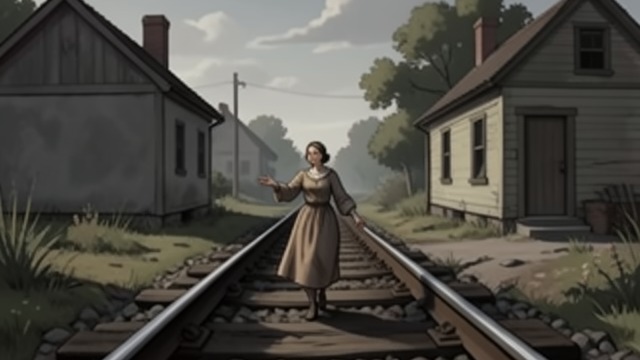
A Journey to Corly Wood
The route to danger
Megan enters Tom’s car after leaving home, while Rachel’s lost evening unfolds around the station and underpass. Railway spaces connect their movements without either woman understanding the other’s danger.
Hidden crossings
The line that once carried Rachel past private homes also passes near the locations where violence and concealment occur. Physical proximity does not create awareness.
The Train After the Crime
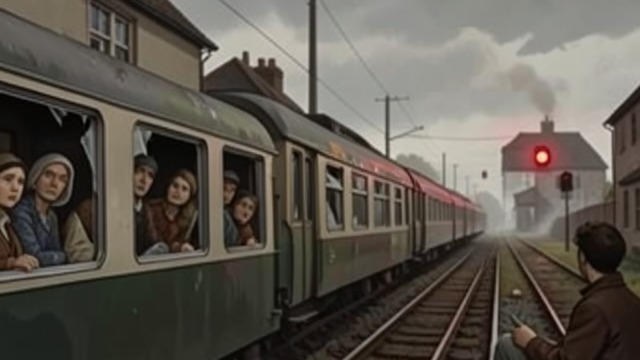
Continuing Beyond the Houses
A changed landscape
Rachel rides past the now-empty homes after Tom’s death. Passengers identify the houses as sites of violence, turning a familiar commute into public spectacle.
Movement toward departure
Rachel leaves for the Norfolk coast and considers traveling farther north. The train motif shifts from passive repetition toward the possibility of an uncertain new life.
Early July 2013
5–9 July 2013
February 2013 and July 2013
13 July 2013, evening
September 2013
